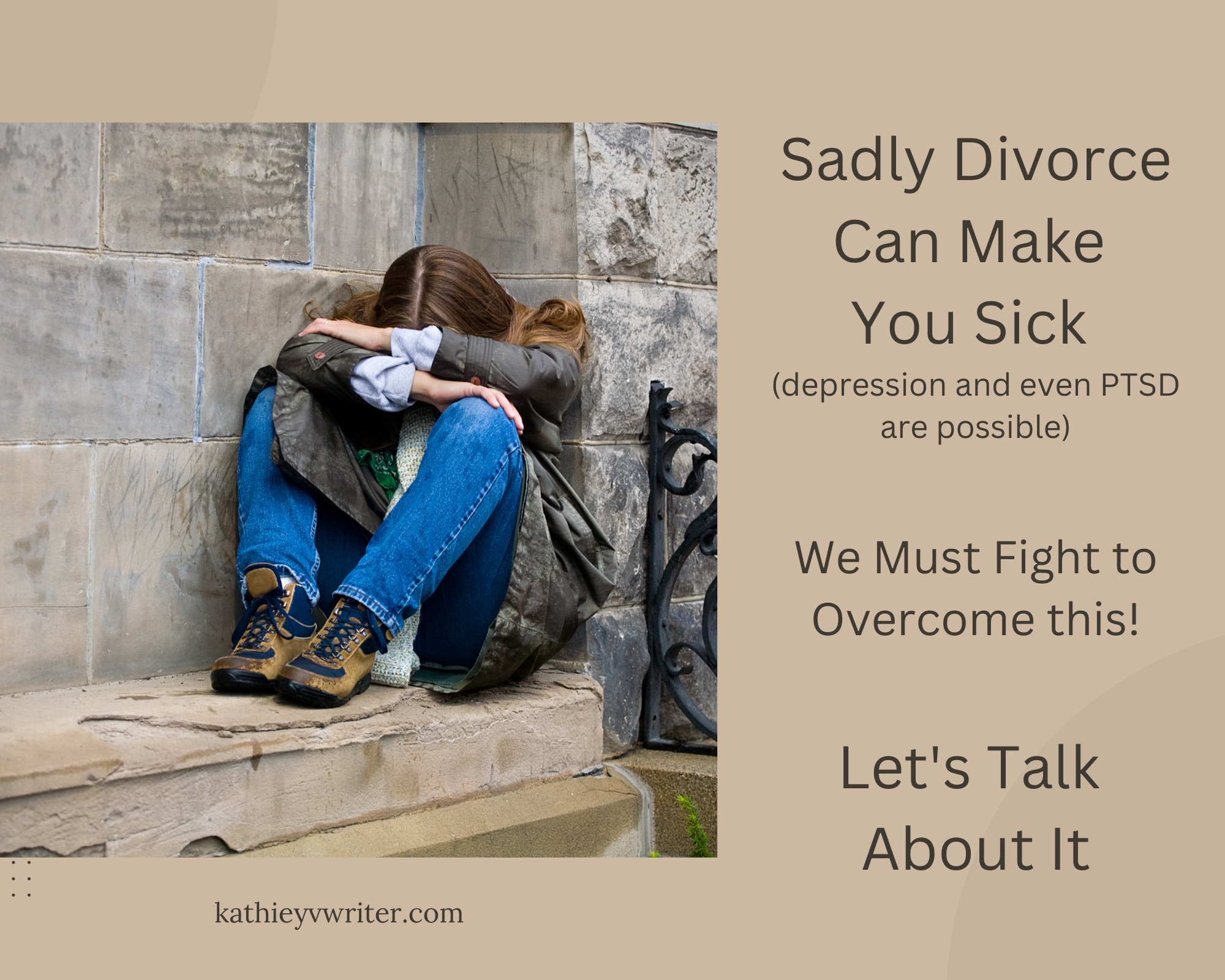
Can Divorce Make You Sick? Sadly Yes. Let’s Talk About It.
I can tell you from personal experience: divorce can absolutely make you sick.

When I discovered that my husband of 37 years had filed for legal separation, the shock hit me like a physical blow. I had no idea this was coming. There was no warning, no preparation, no chance to brace myself. And what followed was one of the most difficult seasons of my life, not just emotionally, but physically. Some of those effects still linger today.
I want to be clear about something. I would never want him back. I now know who he truly is, and I would never knowingly choose to be in a relationship with someone like that. But the trauma of that initial shock was real, and it left marks that took years to begin to heal.
If you are going through something similar, I want you to know that what you are feeling is not weakness. It is your body and mind responding to one of the most painful experiences a person can go through. And there is help.
What the Experts Are Saying
You do not have to take my word for it. Research confirms what so many of us have lived through.
According to Time Magazine:
> “If you’ve gone through a highly emotional split, researchers say your immune system can take a significant hit.”
And:
> “Once that person is absent, your sleep, appetite, and even temperature regulation can be thrown out of whack.”
The U.S. Surgeon General has reported that 30 to 40 percent of those undergoing divorce experience a significant increase in symptoms of depression and anxiety. As Lucinda Bassett, CEO of the Midwest Center for Stress and Anxiety, explains:
> “Any life change is anxiety and stress producing, but divorce is one of the worst because it creates an unknown, unpredicted situation with lots of insecurity, low self-esteem, and fear.”
Perhaps most striking is this: high-conflict divorce has been reclassified as one of the causes of Post-Traumatic Stress Disorder. Women are twice as likely to suffer from PTSD in these circumstances, with symptoms that include flashbacks, heightened anxiety, insomnia, and psychosomatic illness.
Many sites have begun using terms like “Divorce Stress Syndrome” and “Post Divorce Shock” to describe what people go through. And honestly, those names feel accurate.
What It Can Do to Your Body
Beyond the emotional weight, divorce can show up in very real physical ways. Here is what research and experience tell us to watch for:
Insomnia. The stress of divorce increases cortisol levels, making restful sleep incredibly difficult. Getting used to sleeping alone after years of sharing a bed compounds the problem. If insomnia persists for more than a few weeks, it is worth talking to your doctor.
A weakened immune system. Studies show that people going through divorce have a higher than normal chance of developing certain conditions, including heart disease and diabetes. If you find yourself catching every cold that comes your way, your immune system may be taking a hit.
Digestive issues. Stress can cause an upset stomach, nausea, or that constant knotted feeling that just will not go away. This discomfort can also lead to unhealthy weight loss.
Weight changes in both directions. Some people lose weight during divorce due to decreased appetite. Others gain weight as elevated cortisol levels contribute to excess abdominal fat. Both are worth monitoring.
Depression and anxiety. These are among the most common responses to divorce, and they are nothing to push through alone.
My Own Experience
Initially, my symptoms came on hard and strong.
I was on autopilot for days, just going through the motions of life. I could not sleep. Every night I would wake up at 2 AM, curled tightly in the fetal position, jaw clenched, hands balled into fists, tears rolling silently down my cheeks. That insomnia went on for weeks. I lost my appetite entirely. Some people call it the “Grief Diet,” and I understand why.
I had never struggled with depression before, but the constant sadness eventually led me into anxiety and depression. And during that first week, something else happened: my skin began to burn and tingle. It has never fully stopped. I have learned to function with it, but it is always there, a quiet reminder of what my body went through.
I have said it before and I will say it again: divorce is like a death, but with intent. And that intent carries its own unique kind of wound.
What You Can Do to Help Yourself Heal
The good news is that there are things we can do. I have tried many of them, and while not everything works for everyone, they are all worth exploring.
Regulate your nutrition. Stress disrupts your appetite, but your body needs fuel to heal. Eat at regular intervals and focus on whole foods, healthy fats like eggs, avocados, and nuts, and meals that keep your energy and immune system strong.
Establish a consistent daily routine. Chaos lowers your body’s resistance to stress. A predictable schedule for waking, working, eating, and sleeping helps lower cortisol levels and gives your mind something stable to hold onto.
Move your body every day. Exercise releases endorphins that reduce anxiety and lift your mood. Even a 30-minute walk each day can make a meaningful difference.
Practice mindfulness. Breathing exercises, journaling, and guided meditation actively signal to your nervous system that it is safe to rest. Even a few minutes a day adds up over time.
Lean on professional support. A therapist or counselor who specializes in divorce can be life-changing. You do not have to navigate this alone, and asking for help is one of the bravest things you can do.
Stay connected to people. Social interaction releases oxytocin, which naturally reduces anxiety. Reach out to friends and family, join a support group, or simply make plans to be around people who love you.
Explore alternative therapies. Acupuncture, massage, or even spending 20 minutes outside in nature can significantly reduce cortisol levels. Do not underestimate the simple things.
See your doctor. There is no shame in needing medication to get through this season. I was on a low-dose antidepressant during the worst of it, and I truly believe it saved my life.
Hold on to your faith. For me, this was the quiet anchor beneath everything else. On the days when nothing else felt solid, that did.
You Are Not Alone
I would love to hear from you. Did you experience physical symptoms during or after your divorce? What helped you get through each day? How are you doing now?
Whatever you are facing, keep taking one step at a time. Seek help when you need it. And know that healing, real healing, is possible.
If you want to read more about my personal journey through divorce and the faith that carried me through it, my book My Story My Divorce God’s Promise – The Beginning is available on Amazon.
Remember God’s promise: “I will never leave you or forsake you.”
God bless you on this journey.
KathieyV
Disclaimer: I am not a medical or mental health professional. The information shared here is based on my personal experience and publicly available research. Please consult your doctor or a licensed therapist if you are experiencing physical or emotional symptoms related to divorce or separation.